StudFlow
AI-powered learning platform grounded strictly in user-supplied documents
Problem
An answer can only be as reliable as the context supplied to the model. Generic models hallucinate when responding without strict grounding in student materials.
Approach
Ingest PDFs and DOCX, extract machine-readable text, chunk into semantic units, retrieve relevant passages, and supply them as strict grounding context.
Document Extraction & Chunking
Converts uploaded learning material into structured units without destroying context.
Vector Retrieval & Grounding
Selects the exact relevant source passages to anchor generative model responses.
Full-Stack Study Workspace
Interactive summaries, SM-2 spaced-repetition flashcards, quizzes, and grounded AI chat interfaces built with Next.js.
Validation & Fallbacks
Monitors retrieval confidence and handles low-context queries without hallucinating.
Upload learning material
Extract machine-readable text
Section into searchable units
Retrieve relevant source passages
Ground model in context
Generate verified response
Validate output against sources
Full technical write-up
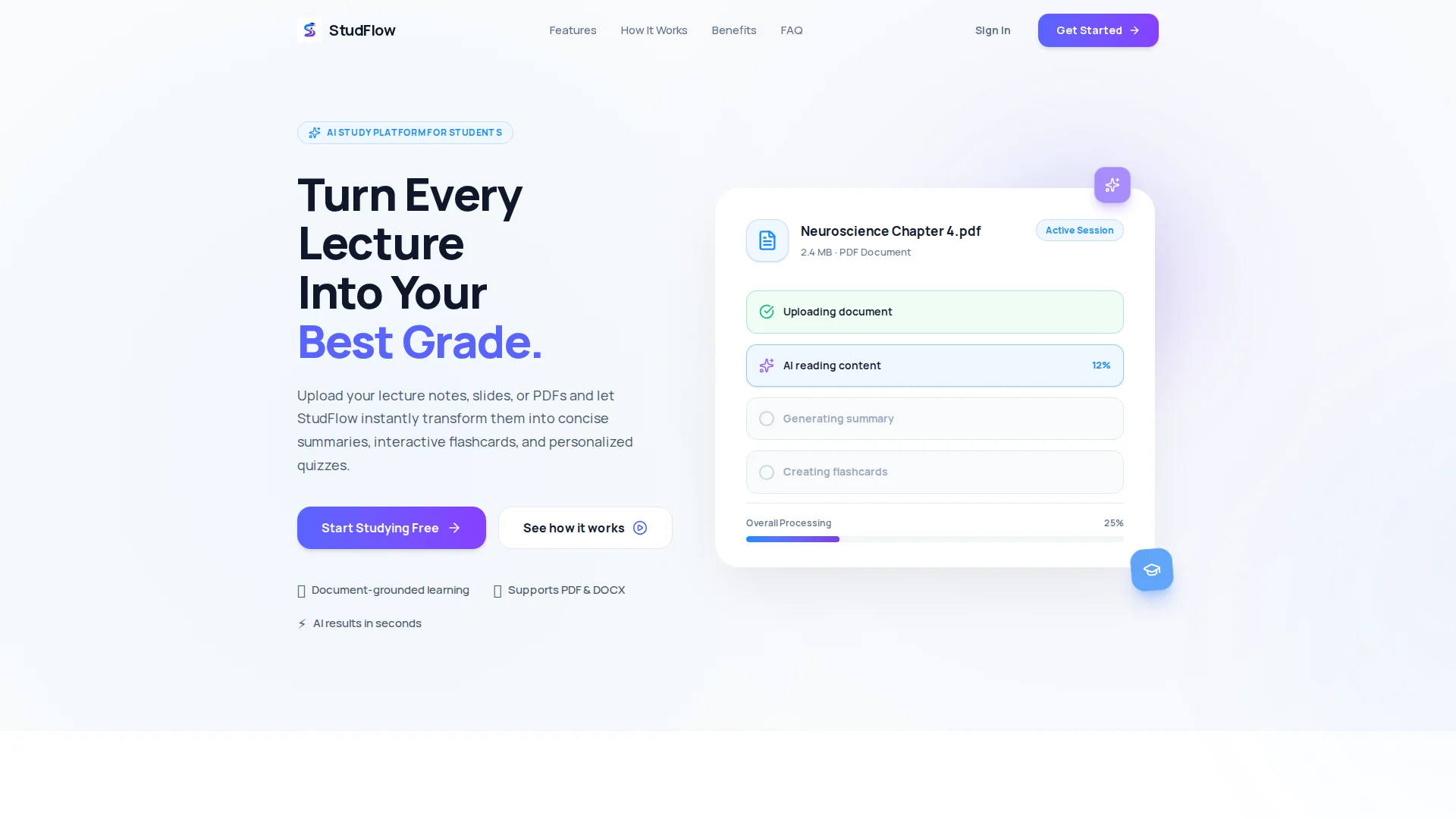
StudFlow is a study platform built around uploaded learning materials. Instead of generating generic responses from an AI model, the system processes the user's documents, retrieves relevant source material, and uses that context to produce responses grounded in what the user actually uploaded.
Generic AI models respond primarily from pre-trained knowledge, which can lead to hallucinated or generalized answers. StudFlow fundamentally changes this by using the student's own uploaded materials as the strict context for every response, intentionally reducing unsupported claims and tying generation directly to the source.
Key engineering considerations included: reliable document extraction from raw PDF and DOCX formats without format corruption, sectioning long materials into semantic chunks, building high-precision retrieval mechanisms to avoid supplying irrelevant context, and fallback mechanisms when student queries fell outside the uploaded materials.
The full architecture brings document ingestion, vector retrieval, and AI-assisted study workflows into one unified full-stack application, ensuring study aids remain traceable directly back to the student's source records.